
Fall-Back Lighting Kit: 5 Easy Upgrades for Safer, Brighter Evenings Around Your Home

Daylight saving time ended on Sunday, November 1, and for most of the Midwest that means sunset lands before 5 p.m. for the next few months. If you live in a ranch or custom home with a long front walk, a detached garage, or a dark side door, you notice it fast: you pull in after work and fumble for keys, the steps blend into the shadows, and the hallway to the bedrooms turns into a stub-your-toe zone at night.
The good news is you don't need a landscape-lighting contractor to fix most of it. The 2026 outdoor-lighting conversation is all about automation (lights that follow actual sunset instead of a clock), layered lighting instead of one blinding floodlight, and motion sensors that only kick in when someone is actually there. You can get most of that this weekend with five plug-in, screw-in, or stake-in products.
This post contains affiliate links. If you buy through them, Home Channel TV may earn a commission at no extra cost to you.
Here's the kit, in the order we'd tackle it.

1. Dusk-to-Dawn LED Bulbs for the Porch and Garage Fixtures
What it is: A standard LED bulb with a built-in light sensor. It turns on when it gets dark and off when the sun comes up, with no timer to reset after the time change.
Who it helps: Anyone whose porch light is either on all day or off when they need it. It's the single cheapest fix on this list.
Why it fits: Your front entry and garage coach lights are already wired. This turns them into automatic lights for the price of a bulb.
What to look for: Match the base (usually E26 medium) and confirm the bulb is rated for enclosed fixtures if your lantern is closed. Choose 2700K–3000K warm white so the front of the house looks welcoming rather than like a parking lot, and aim for around 800 lumens (a 60-watt equivalent) per fixture. Make sure the fixture's glass isn't shading the sensor, or the bulb may cycle on and off.
Approximate price: Typically about $10–$25 for a two- to four-pack.

2. Path Lights for the Front Walk (Solar or Low-Voltage)
What it is: Stake-in lights that line a walkway, steps, or the route from the back door to a detached garage.
Who it helps: Homes with a long front walk, a few steps up to the porch, or a dark side yard. It's also a big help for older family members and guests who don't know where the edge of the walk is.
Why it fits: Path lighting is the "safe navigation" layer that lighting designers keep pointing to. It lights the ground where you're stepping instead of shining in your eyes.
What to look for: For solar, look for a decent lumen rating (at least 15–25 lumens per light for real visibility, not just a glow), a replaceable rechargeable battery, and a warm-white option. Keep in mind short, cloudy Illinois winter days mean solar lights may run fewer hours. If you want consistent brightness, a low-voltage plug-in kit with a transformer is the step up. Space lights about 6 to 8 feet apart and stagger them on both sides instead of lining them up like a runway.
Approximate price: Solar sets typically run about $25–$60 for 6–12 lights. Low-voltage starter kits commonly run about $100–$250.

3. A Motion-Sensor LED Floodlight for the Driveway or Side Door
What it is: A bright, motion-activated LED fixture for the garage corner, driveway, or back of the house.
Who it helps: Anyone who pulls into a dark driveway, takes out the trash after dinner, or has a side or back door that nobody can see from the street.
Why it fits: Security-lighting guidance in 2026 centers on the perimeter: one good motion light at the driveway does more than flooding the whole yard all night. It also helps any doorbell or security camera capture a clearer image.
What to look for: Adjustable motion sensitivity and range (consumer models commonly detect around 20–30 feet), a built-in dusk sensor so it only triggers after dark, adjustable heads, and a weather rating of IP65 or better. Some models offer a dim "standby" mode that brightens on motion, which is easier on neighbors. Hardwired models replace an existing fixture; battery or solar versions mount anywhere.
Approximate price: Non-camera models typically run about $30–$90. Camera floodlights cost considerably more.

4. An Outdoor Smart Plug for Lanterns, Landscape Lights, or Seasonal Strands
What it is: A weatherproof plug-in outlet adapter you control by app or voice, with schedules built around sunrise and sunset.
Who it helps: Homes with plug-in landscape lighting, porch string lights, or the holiday lights that are about four weeks away.
Why it fits: Sunset-based scheduling is the feature lighting pros say actually gets used. It adjusts itself after the time change, so you set it once and forget about it.
What to look for: Outdoor/weather rating (IP44 or higher), two independently controlled outlets if you want separate zones, sunrise/sunset scheduling (sometimes called astronomical or "away" mode), and compatibility with whatever voice assistant you already use. Plug it into a GFCI-protected exterior outlet, and keep the cover closed.
Approximate price: Typically about $20–$40.
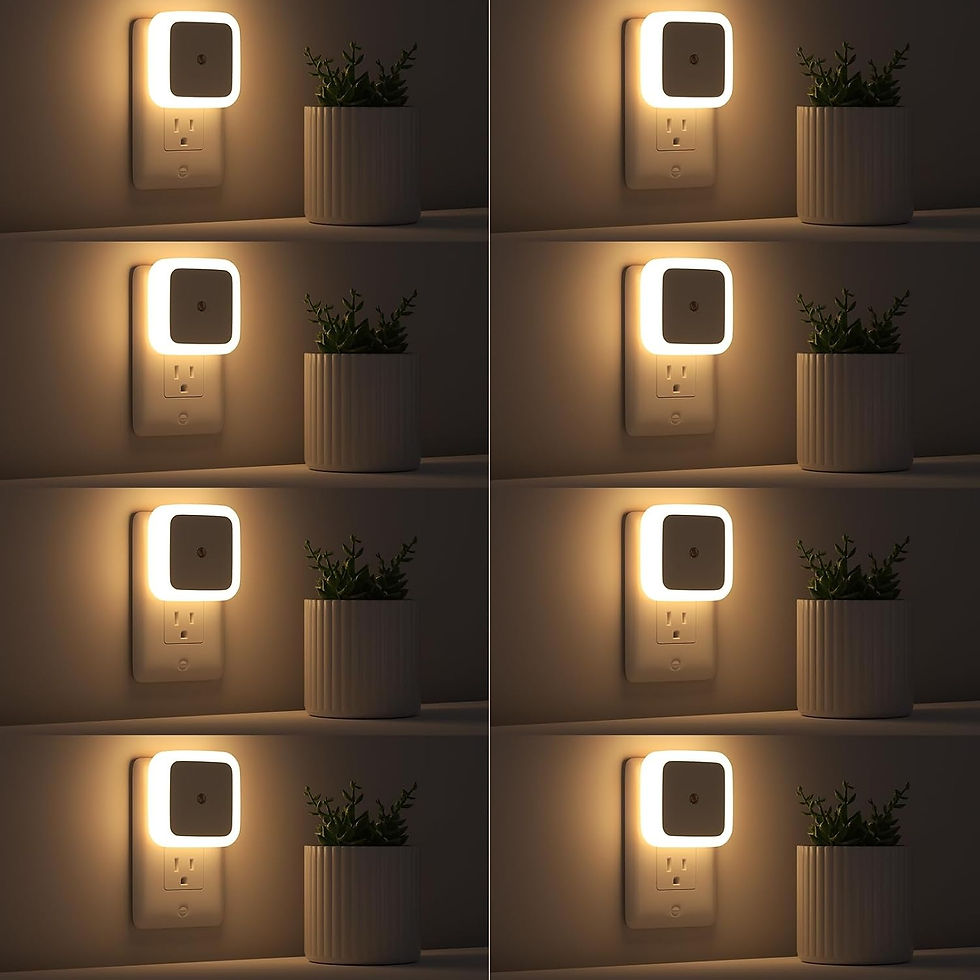
5. Motion-Sensor Night Lights for Hallways and Stairs
What it is: Small plug-in or rechargeable stick-on LED lights that glow when they sense movement after dark.
Who it helps: Ranch homes with a long bedroom hallway, split-level stairs, basement steps, and any household with kids, pets, or overnight guests.
Why it fits: Earlier darkness isn't just an outdoor issue. These cover the "nobody wants to flip on the overhead light at 2 a.m." moments.
What to look for: Warm, low-glare light (around 2700K or amber), motion plus light sensors so they only come on in the dark, and USB-C rechargeable stick-on versions for stair runs and closets with no outlet. Place them low, near the floor or along the stair stringer, so they light your path without lighting up the bedroom.
Approximate price: Typically about $15–$35 for a multipack.

How to Put the Kit Together This Weekend
Walk your home after dark one evening this week, from the driveway to the front door to the bedrooms, and note every spot where you slowed down or reached for your phone flashlight. Then fix them in order. Swap the porch and garage bulbs first, add the driveway motion light, line the walk, and finish inside with hallway and stair lights. Keep every bulb in the same warm color range so the house looks pulled together from the street.
If you're building new or planning a remodel, use this list as a conversation starter with your builder or electrician. Ask about switched exterior outlets, a photocell or smart switch on the front entry circuit, and low-voltage wiring for future landscape lighting while the walls and yard are still open.
Wrap-up: Start with the cheapest win. Put dusk-to-dawn bulbs in your porch and garage fixtures before Sunday's time change, then do your after-dark walk and add the rest where you actually need it.
This post contains affiliate links. If you buy through them, Home Channel TV may earn a commission at no extra cost to you.


Comments