
Pick Paint Colors That Flow Through Your Whole Home (Without Going Bland)

Walk through enough new-construction ranches and you notice something: the homes that feel calm and finished aren't always the ones with the boldest colors. They're the ones where the paint makes sense as you move from the entry to the kitchen to the great room to the hallway. In an open floor plan, you can see four or five "rooms" from one spot, so picking colors one room at a time is how you end up with a house that feels choppy.
The good news is that the current color direction makes a connected plan easier. Sherwin-Williams picked Universal Khaki, a warm mid-tone neutral, as its 2026 Color of the Year, and both Sherwin-Williams (Celery, a soft herbal green) and Benjamin Moore (Webster Green, a deeper classic green) have gone green for 2027. Warm neutrals as the base and an earthy green as the accent is a simple, livable plan for a lot of homes. Here's how to build yours.
Start With What Isn't Changing
Before you pull a single paint chip, list the finishes you're keeping: flooring, cabinets, countertops, fireplace stone or brick, and any stained wood trim or beams. These are your fixed elements, and your paint has to get along with all of them.
Then look at the undertones. Hold a white sheet of printer paper next to each finish. Does your LVP or oak floor lean yellow, orange, or gray? Does your quartz have cool gray veining or warm beige? Paint with the wrong undertone is what makes a "nice greige" look muddy next to warm oak, or makes a creamy white look dingy next to cool gray tile.
Takeaway: Pick paint last, after the hard finishes, and match its undertone (warm, cool, or neutral) to the floor and the cabinets you see most.
Use One Main Color for Connected Spaces
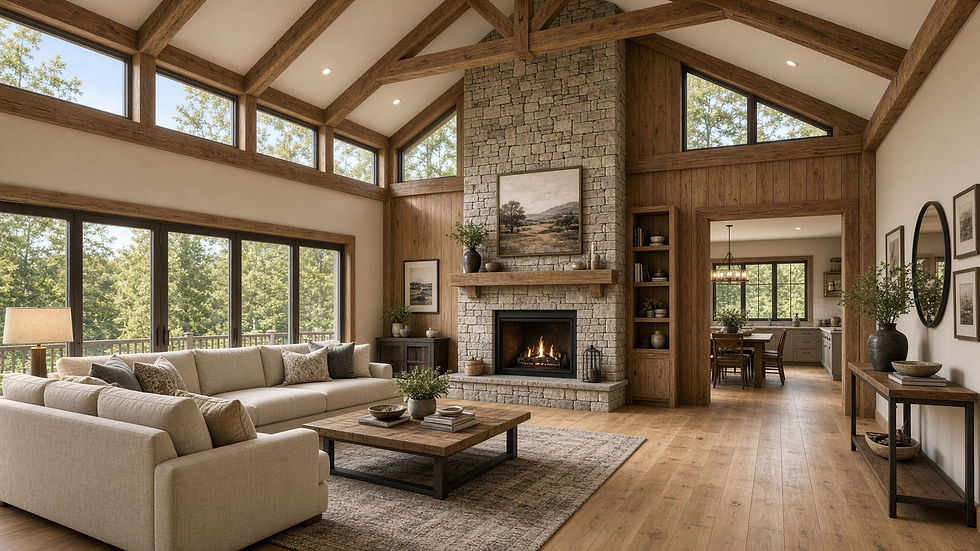
In an open-concept ranch, the entry, great room, kitchen, dining area, and main hallways usually read as one big space. Give them one main wall color. That's what makes the square footage feel bigger and the house feel pulled together.
Save color changes for natural stopping points:
- Doorways into bedrooms, bathrooms, the office, or the laundry room
- An inside corner, never the middle of a flat wall
- A real architectural break, like a cased opening or a step down
Bedrooms and baths behind a door can have their own personality, but give them a family resemblance: same undertone, or a lighter or deeper version of a color you already used. If your main color is a warm khaki-beige, a sage or olive green in the primary bedroom feels connected. A cool blue-gray usually won't.
Takeaway: Write a simple map (main color, two or three supporting colors, one accent) and assign each room before you buy anything.

Read the Light Before You Choose
The same color can look completely different on the north and south sides of your house. Check the LRV (light reflectance value) on the back of the chip or on the brand's website. It runs from 0 (black) to 100 (pure white) and tells you roughly how much light a color bounces back.
A few practical rules:
- North-facing rooms get cooler, bluer light all day. Lean warm (cream, warm greige, soft khaki) and stay in a higher LRV range so the room doesn't go gray and flat.
- South-facing rooms get warm light that can make yellow-leaning colors look stronger. A slightly cooler or more muted neutral usually holds up better.
- Lower-level and walk-out basement rooms with less daylight need warm, lighter colors and good lighting more than anything trendy.
- Your bulbs matter. Warm white bulbs (2700K to 3000K) push colors warmer at night, so judge your samples under your real lights.
Takeaway: Don't fall for a color in a bright store or on a phone screen. The only test that counts is your wall, at morning, midday, and night.

Put the Trend Colors Where They Earn Their Keep
Earthy greens and deep browns are having a real moment, but you don't need to paint the whole house to use them. The places we see deeper colors work best:
- A home office, den, or flex room where you want a cozy, wrapped-in feeling
- A powder room or small guest bath, where a bold color is a short visit, not an everyday commitment
- Lower cabinets or a contrasting island, where a green or brown sits against a lighter perimeter
- A primary bedroom accent wall behind the bed
If you love the look of color drenching (walls, trim, and sometimes ceiling all in one color), try it in a smaller room with a door first. You'll know quickly whether you want to live with it.
Takeaway: Keep the high-traffic, open areas in your main neutral and put the trend color in one or two contained spaces where it can make a statement.

Get the Sheen and the Samples Right
Color gets the attention, but sheen decides how your walls hold up. A common, practical breakdown:
- Ceilings: flat
- Living areas, bedrooms, hallways: matte or eggshell (choose a scrubbable matte if you have kids or pets)
- Kitchens, baths, and laundry: satin, which wipes clean and handles moisture better
- Trim and doors: satin or semi-gloss
For ceilings, plain ceiling white is fine, but many designers tint the ceiling with a lighter version of the wall color so it doesn't look stark against a warm wall.
Sample big. Paint two coats on a poster board or use peel-and-stick samples, at least 12 by 12 inches, and move them around the room: next to the floor, next to the cabinets, on the darkest wall. Live with them for two or three days before you commit.
If you're doing it yourself, winter is a good time to paint indoors: no humidity battles, and you're inside anyway. Use a low-VOC paint, crack a window or run the bath fans, and plan around your calendar. If you're hosting Thanksgiving, finish a week ahead or wait until the weekend after.
What It Costs, and the Lower-Cost Version
According to Angi's 2026 data, the national average to have a pro paint a home's interior is about $2,022, with most homeowners paying $965 to $3,089 and labor typically running $2 to $6 per square foot. Tall vaulted ceilings, textured walls, and lots of trim push it higher, and drywall repair is extra.
The lower-cost path: hire out the hard part (vaulted great-room walls and ceilings) and paint the bedrooms, office, and baths yourself. Or start with just the main connected space this winter, since that's where you'll notice the biggest difference, and add the accent rooms over time.
Where to Start
This weekend, do the paper test on your floors and cabinets, sketch a one-page color map for your main level, and order three or four large samples in your main neutral family. Once that main color is settled, every other choice in the house gets easier.
What color are you thinking about for your main living space? Tell us in the comments.


Comments